Jaggery (Gur): The Ultimate Guide on Benefits, Uses and Prices (2025)
1. Introduction to Jaggery (Gur)
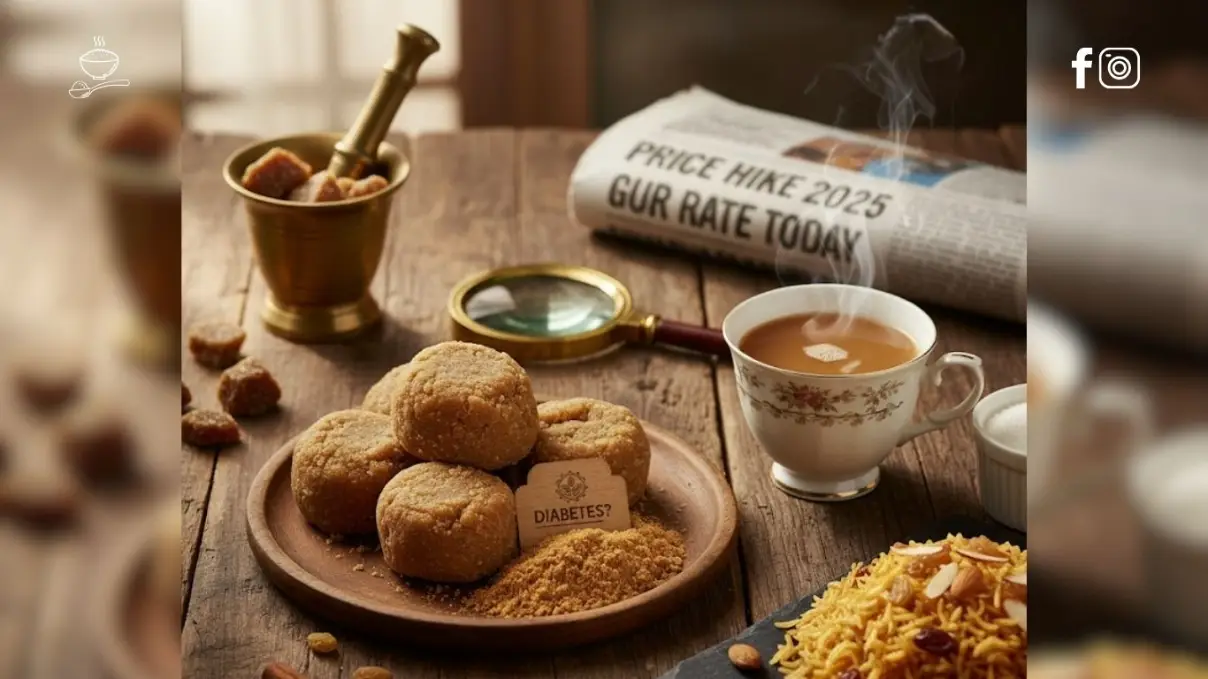
As the smog clears and the winter chill settles over Punjab and Karachi, the aroma of fresh Gur (Jaggery) begins to waft through our kitchens. For generations, Pakistani grandmothers have sworn by a piece of Gur after dinner for digestion, but in 2025, this humble ingredient has rebranded itself as a “Superfood.”
From elite fitness influencers in Lahore to traditional Hakeems, everyone is talking about switching from white sugar to Jaggery. But is it actually healthier, or is it just a sugar trap in a brown disguise?
In this guide, we break down everything you need to know: the real price of Gur in Pakistan today, whether diabetics can actually eat it, and how to make the perfect Gur Walay Chawal.
Table of Contents
2. What is Jaggery? (Urdu Meaning & Definition)
If you have searched for “Jaggery meaning in Urdu,” here is the simple answer:
- English Name: Jaggery
- Urdu/Hindi Name: Gur (گڑ)
- Regional Names: Shakkar (Powdered form), Vellam (South Asian term).
Jaggery is unrefined sugar made by boiling concentrated sugarcane juice until it solidifies. Unlike white sugar, which is stripped of all nutrients during chemical processing (bleaching), Jaggery retains the natural fiber and mineral salts of the sugarcane plant.
Jaggery vs. Sugar: The Nutritional Face-Off (Per 100g)
Many people ask, “Is jaggery better than sugar?” The answer lies in the data. While the calorie count is similar, the nutritional quality is vastly different.
| Nutrient | Jaggery (Gur) | White Sugar | Winner |
| Calories | 383 kcal | 387 kcal | Draw (Almost the same) |
| Processing | Natural Boiling | Chemical Refining | Jaggery |
| Iron | ~11 mg | 0.1 mg | Jaggery (Great for Anemia) |
| Magnesium | ~70-90 mg | 0 mg | Jaggery |
| Potassium | ~1000 mg | 2 mg | Jaggery |
| Glycemic Index | 84.4 (Very High) | 65-100 (High) | Sugar (Surprisingly, see Section 4) |
⚠️ Important Note on Brown Sugar vs. Gur:
Do not confuse Gur with the “Brown Sugar” sold in supermarkets. Commercial Brown Sugar is often just white sugar with molasses added back in for color. Pure Desi Gur is dark brown, imperfect in shape, and has a rich, earthy smell.

Desi Gur گڑ Jaggery | Organic Sweetner
Price range: ₨1,300.00 through ₨6,000.00
Key Highlights:
-
Made from 100% natural sugarcane juice.
-
No chemical additives or artificial colors.
-
A natural, healthy alternative to white sugar.
3. Health Benefits: Why Our Elders Ate Gur
In Pakistani culture, Gur is more than just a sweet treat; it is considered a “functional food” (medicine). Science now backs up what our grandmothers knew: Jaggery is a powerhouse of nutrients, provided you eat the right kind. Khaalis Zaike Gur, is more healthier due to its purity and chemical free processing. Here are some key Jaggery benefits:
A. The “Winter Shield” (Immunity & Garm Taseer)
- Why it works: In Ayurveda and Unani medicine, Jaggery is classified as having “Ushna” (Hot Potency) or Garm Taseer. This makes it ideal for the freezing winters of Punjab and KP.
- The Benefit: It generates heat in the body, dilates blood vessels, and acts as a natural decongestant.
- Best Use: Eating Gur with ginger or black pepper can help clear mucus from the lungs and soothe a sore throat.
B. The Post-Meal Digestive Aid
- The Ritual: You’ve likely seen elders eat a small chunk of Gur after a heavy meal of Nihari or Biryani.
- The Science: Jaggery activates digestive enzymes in the stomach, speeding up digestion and preventing acidity or constipation. Unlike white sugar, which can cause bloating, Gur helps keep the gut clean.
C. Iron & Pregnancy Health (Anemia Fighter)
- The Stat: 100g of Jaggery contains approx 11mg of Iron (nearly 60% of daily requirement).
- For Women: Pakistan has high rates of anemia (iron deficiency) among women. Regular consumption of Gur (in moderation) can boost hemoglobin levels naturally.
- Pregnancy Note: While beneficial for iron, pregnant women must avoid overeating it due to its heating effect. Always consult your doctor first.
D. The “Detox” Effect
What is the detox effect:
Liver Cleanse: Jaggery helps flush out harmful toxins from the liver and blood. This is why it is often recommended for people living in smog-hit cities like Lahore to combat pollution-related toxicity.
4. Can Diabetics Eat Jaggery?
🚨 Critical Warning: This is the most common myth in Pakistan. Please read carefully.
If you search “Is jaggery good for diabetes,” you will find conflicting advice. Here is the medical reality for 2025.
The Myth:
“Gur is natural and unprocessed, so it is safe for sugar patients.”
The Fact:
No, Jaggery is NOT safe for unregulated consumption by diabetics. While it is nutrient-rich, it is still practically pure sugar (sucrose).
The Glycemic Index (GI) Reality
The Glycemic Index measures how fast a food spikes your blood sugar (0-100).
- White Sugar GI: ~65
- Jaggery (Gur) GI: ~84.4
Shocking Insight: Jaggery has a higher Glycemic Index than refined sugar because it is absorbed into the blood incredibly fast. It causes immediate insulin spikes.
The Verdict for Diabetics:
- Strictly Avoid: If your HbA1c is uncontrolled, avoid Gur completely. It will spike your sugar just as fast as white sugar.
- The “Cheating” Rule: If you must have a sweet treat, Gur is “better” than cake only because it offers some minerals, but the sugar damage is the same.
- Quantity Matters: A piece the size of a peanut is the maximum limit, not a whole block.
5. Weight Loss: Friend or Foe?
“Does jaggery make you fat?” is one of the most searched questions in Pakistan this year. The answer isn’t a simple Yes or No—it depends entirely on how you use it.
The Calorie Trap (Math Don’t Lie)
Many people replace 2 spoons of sugar with 2 spoons of Gur, thinking they are saving calories. They are not.
- 100g Sugar: ~387 Calories
- 100g Jaggery: ~383 CaloriesResult: If you eat Gur freely like a snack, you will gain weight.
How It Actually Helps You Lose Weight
Despite the calories, nutritionists in Pakistan recommend it for weight loss for three specific physiological reasons:
- Potassium Power: Jaggery is rich in potassium, which balances electrolytes and reduces water retention (bloating). If you feel “puffy,” Gur can help reduce that water weight.
- Metabolism Boost: It generates heat in the body (thermogenic effect), which can slightly rev up your metabolism in winter.
- The “Fullness” Factor: Unlike white sugar, which triggers instant hunger again, the complex structure of Jaggery (sucrose + fiber) keeps you satisfied longer.
🥗 The Weight Loss Prescription:
Do not add Gur to your diet. Replace your existing sugar with it.
- Limit: Max 10-15g (small piece) per day.
- Best Time: Early morning with warm water (Gur Water) to flush toxins.
6. Buyer’s Guide: Gur Price in Pakistan (Nov 2025)
Buying Gur in Pakistan can be tricky because the market is flooded with chemically treated versions. Here is your survival guide for the local mandi.
A. Current Market Rates (2025)
Prices vary by city and purity. We analyzed rates from online brands like Khaalis Zaike, including shipping rates and government-imposed taxes.
| Online Seller | Product | Total Cost Estimate (1KG) |
| Khaalis Zaike | Desi Gur (1 KG Pack) | ₨ 1,300 |
| Khaalis Zaike | Desi Gur (5 KG Pack) | ₨ 1,200 per KG |
| Dry Delights / Other Premium | Organic Gur (Approx. 1 KG) | ₨ 1,250 – ₨ 1,550 |
Note: Prices fluctuate weekly. Expect a 100-200 rupee hike as winter peaks in December.
B. How to Spot “Fake” (Chemical) Jaggery
Vendors often use sodium hydrosulfite (bleach) to make Gur look bright yellow, as customers mistakenly think “clean color = good quality.”
| Feature | Pure Desi Gur (Safe) | Chemical Gur (Unsafe) |
| Color | Dark Brown / Blackish | Bright Yellow / Whitish |
| Taste | Sweet + slightly salty | Bitter or overly sweet |
| Hardness | Soft, easy to break | Very hard / Crystalline |
| Water Test | Dissolves fully | Leaves white chalky powder |
🛒 Pro Tip: When at the shop, ask for “Bina masalay wala Gur” (Gur without chemicals). It will look ugly and dark, but it is the healthiest option.
7. Famous Pakistani Recipes (Winter Specials)
No winter in Pakistan is complete without these two staples. However, making them can be tricky—milk curdles in tea, and rice can turn hard. Here are the fail-proof methods.
A. The Perfect “Gur Walay Chawal” (Jaggery Rice)
A traditional Punjabi dish best served with fresh malai or plain yogurt.
Ingredients:
- Rice: 2 cups (Old Basmati, soaked for 30 mins)
- Jaggery: 1.5 cups (Dark Desi Gur, crushed)
- Ghee: ½ cup (Desi Ghee is best)
- Spices: 4 Green Cardamoms, 1 tsp Fennel Seeds (Saunf), 2-3 Cloves.
- Nuts: Almonds, coconut slices, raisins.
Step-by-Step Method:
- The Syrup (Chashni): In a pan, add ½ cup water and the crushed Jaggery. Cook on low heat until it melts. Pro Tip: Strain this liquid to remove any sugarcane impurities/dirt.
- Boil Rice: Boil the rice separately in water with the cloves until it is 90% cooked (1 kanni). Drain the water.
- The Tarka: In a large pot, heat the Ghee. Add cardamom and fennel seeds (saunf) until fragrant.
- Combine: Pour the Jaggery syrup into the ghee carefully (it will bubble!). Let it cook for 1 minute.
- Steam (Dum): Add the boiled rice and nuts to the syrup. Mix gently only once to avoid breaking grains. Cover with a cloth and cook on very low heat (Dum) for 15-20 minutes.
Common Mistake: If your rice becomes hard, it means your syrup was too thick (overcooked). Keep the syrup runny!
B. Gur Wali Chai (That Doesn’t Split)
The biggest challenge with Jaggery Tea is that it curdles the milk instantly.
The Secret Technique:
- Boil water, tea leaves (patti), and cardamom/ginger as usual.
- Add milk and bring it to a full boil.
- TURN OFF THE FLAME. (This is the secret).
- Wait for 30 seconds so the temperature drops slightly.
- Add Jaggery Powder (Shakkar) or crushed Gur into the cup, NOT the pot.
- Pour the hot tea over it and stir. Result: Creamy, rich tea with zero curdling.
8. Frequently Asked Questions (FAQs)
Q: Is Jaggery acidic or alkaline?
A: Unlike white sugar which causes acidity, Jaggery is Alkaline. This means it helps balance the pH level of your stomach and can actually reduce acidity if eaten in small amounts (peanut-sized) after a meal.
Q: Gur vs. Honey: Which is better for weight loss?
A: Honey wins. Honey has a lower Glycemic Index (58) compared to Jaggery (84) and fewer calories per tablespoon. Use honey for weight loss, but use Jaggery for iron deficiency and menstrual cramps.
Q: What are the side effects of eating too much Gur?
A:
- Weight Gain: It is still sugar.
- Nosebleeds: Due to its heating effect (Garm Taseer), avoid eating large amounts in hot summer months.
- Indigestion: Overeating causes bloating.
Q: Is it safe to eat Jaggery every day?
A: Yes, for a healthy person, 10-15 grams (one small chunk) per day is safe and beneficial.
Conclusion:
In November 2025, as Pakistanis look for healthier alternatives to white poison (sugar), Gur stands out as the superior choice—but it is not a magic bullet.
- For the Anemic/Weak: It is a superfood.
- For the Foodie: It is a winter delight.
- For the Diabetic: It is a red light.
Your Next Step: Next time you are at the market, ignore the bright yellow blocks. Look for the ugly, dark brown Desi Gur. That is where the real health (and taste) hides.