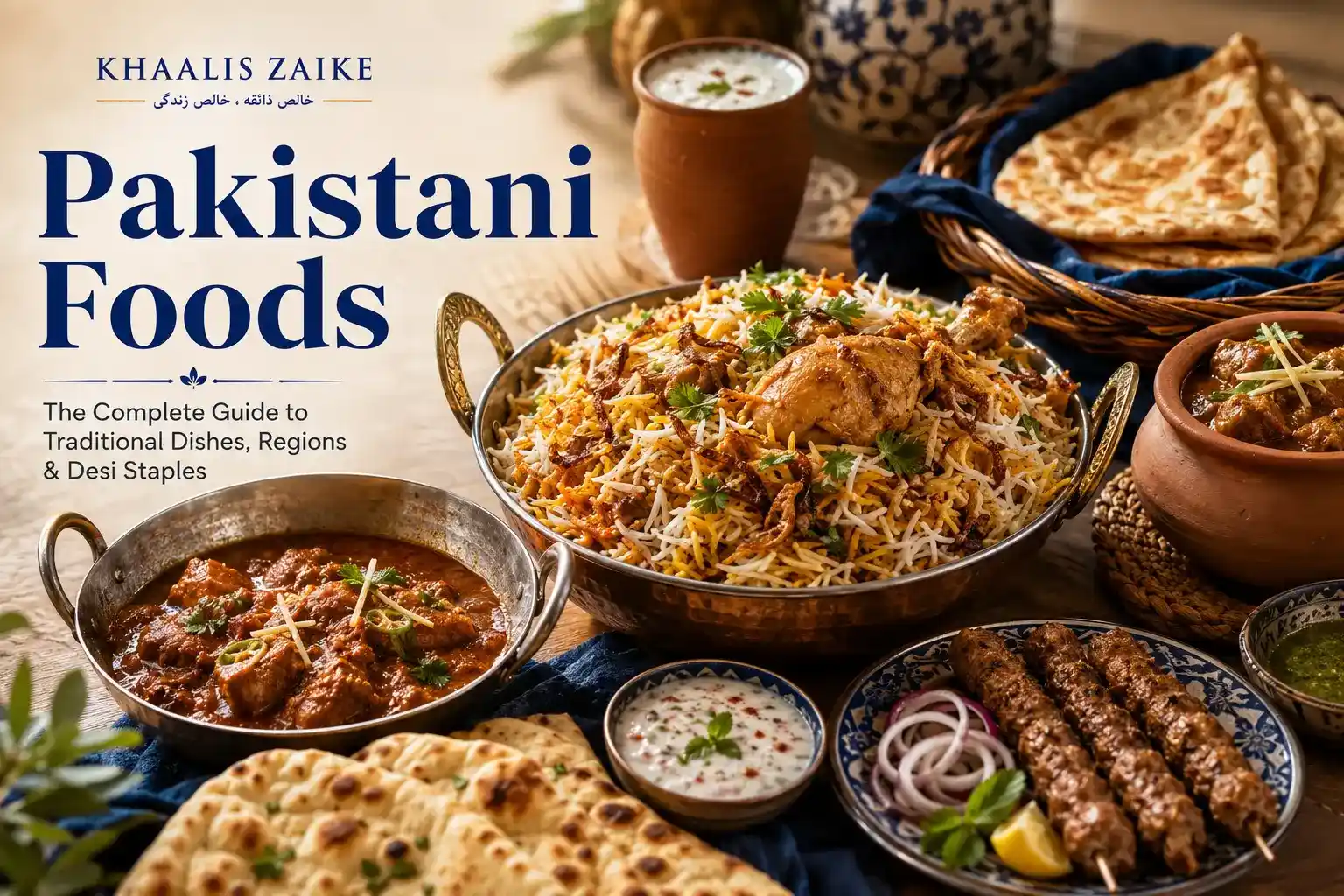
Pakistani Foods: The Complete Guide to Traditional Dishes, Regions & Desi Staples
Ask someone in Lahore what “Pakistani food” means, and they will probably talk about butter, cream, and a slow-cooked curry. Ask someone in Quetta, and they will tell you about a whole lamb roasting over open coals. Ask someone in Karachi, and fish will come into the conversation. Pakistani food is not really one single style of cooking. It is four regional food cultures, Punjab, Sindh, Khyber Pakhtunkhwa, and Balochistan, that all happen to belong to the same country.
This guide brings all of it together in one place: the famous dishes everyone asks about, the traditional food of each province, the pantry staples that quietly built this whole style of cooking, a full breakfast and dessert list, an A-Z Pakistani food names list with Urdu, and a full week’s Pakistani food menu you can actually cook from. FAQs are answered in simple language throughout, so if you are short on time, you can find quick answers there too.
Quick answers, at a glance:
- Pakistan’s national dish: Most people say Nihari, though it has never been made official. Biryani and Daal both have a real claim too (details below).
- Most popular dish overall: Biryani. It appears most often at weddings, Eid, and Sunday lunches.
- Best Pakistani food for beginners: Chicken Karahi or Chicken Korma. Both are full of flavor without being too spicy.
- Traditional Pakistani breakfast: Paratha and eggs on weekdays, Halwa Puri on weekends.
- Food eaten most often, no matter the income level: Daal (lentils) with roti or rice.
Jump to a section:
- What Is Pakistani (Desi) Food?
- What Is Pakistan’s National Dish?
- Traditional Pantry Staples Every Kitchen Keeps
- Traditional Pakistani Breakfast (Nashta)
- Vegetarian Pakistani Foods
- Famous & Popular Pakistani Foods
- Traditional Pakistani Food by Region
- Popular Pakistani Desserts (Mithai)
- Easy Pakistani Foods for Beginners & Students
- A Week of Pakistani Food: Sample Menu
- Pakistani Food Names List: A to Z, with Urdu
- FAQs
What Is Pakistani (Desi) Food?
Pakistani food, often called desi food, grew out of four older food cultures: Punjabi, Sindhi, Pashtun, and Balochi. Over time, it was shaped further by Mughal royal cooking and centuries of trade with Persia, Central Asia, and the Arab world. “Desi” simply means “of the land” or “homegrown.” In everyday use, it means home-style South Asian cooking, not restaurant fusion food or food brought in from abroad.
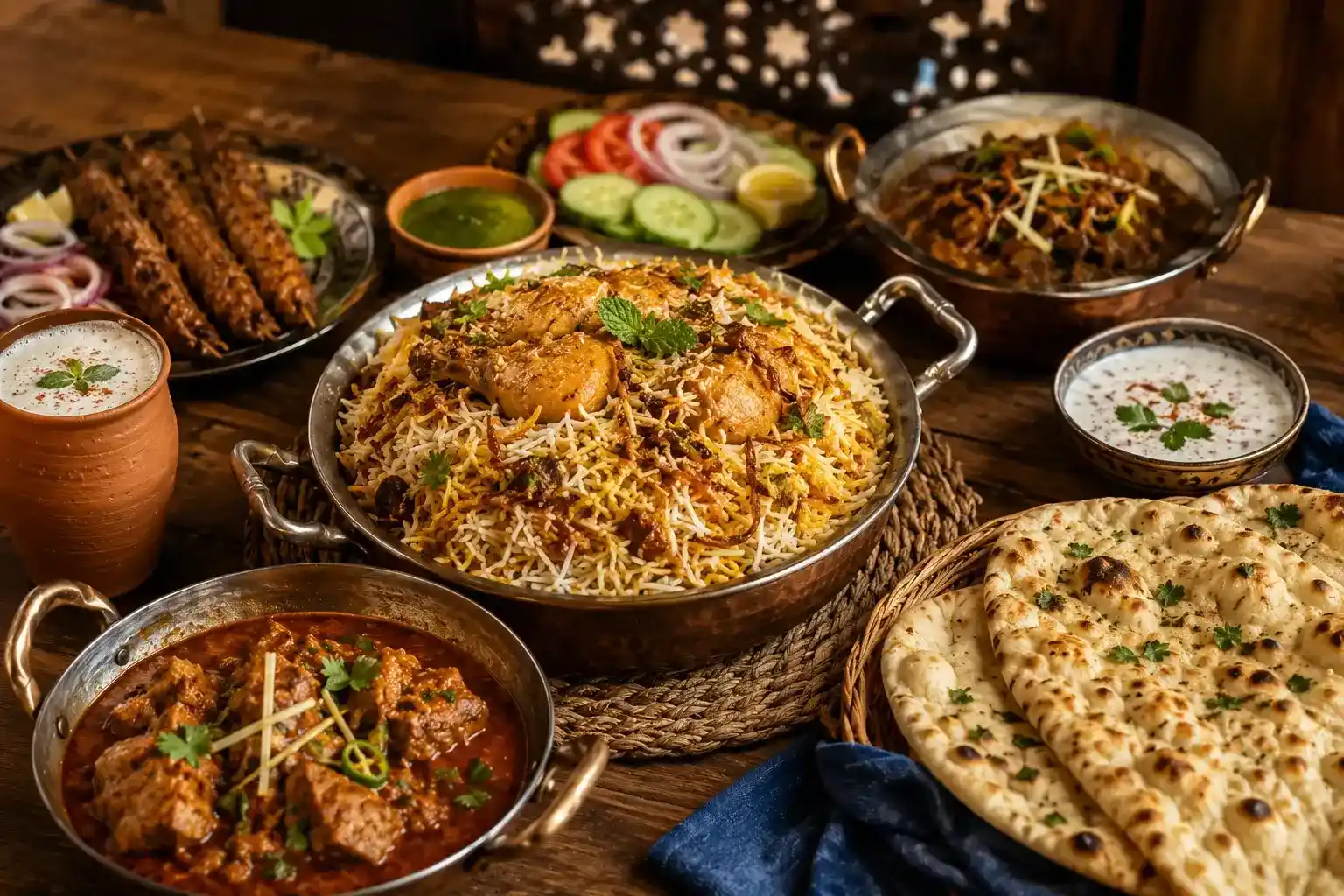
This style of cooking relies on a few things again and again:
- Wheat and rice as the base of almost every meal
- Desi ghee and whole spices (cumin, coriander, garam masala) doing most of the flavor work
- A bread-and-curry style of eating: naan or roti is used to scoop up meat, lentils, or vegetables, instead of a fork
- Meat, especially beef and mutton, plays a bigger role than in many neighboring countries’ food, even though daal and vegetable curries are what most families actually eat day to day
Most of it is still taught by watching, not by reading a recipe. It passes from mother to daughter and father to son, which is part of why the “same” dish can taste noticeably different from one house to the next.
What Is Pakistan’s National Dish?
Nihari (نہاری) is the dish most people call Pakistan’s national dish, though no government has ever made this official. It is a beef or mutton stew, cooked slowly for hours (traditionally overnight), with a thick, flour-based gravy, finished at the table with fresh lemon, ginger, and green chilies. Its name comes from the Arabic word for “morning,” because it was first a breakfast dish, eaten after Fajr prayer by workers who needed a filling, high-protein meal before a full day of hard physical work.
Biryani (بریانی) is the strongest rival to Nihari’s claim. In some ways, it has a stronger case around the world, since it’s the dish most Pakistani restaurants abroad are actually known for. It’s also the one dish that shows up at almost every wedding and Eid table across the country.
Daal (دال) makes a quieter, third case. Chicken Karahi and Biryani both cost more to make, so daal chawal (lentils and rice) is what most Pakistanis actually eat most often, at every income level, even though it never gets the “national dish” spotlight.
There is no single official answer. But if you had to guess which one most people name first, it would be Nihari.
Traditional Pantry Staples Every Pakistani Kitchen Still Keeps
Restaurant dishes get most of the attention, but these are the staples that actually built Pakistani cooking, often for generations before any restaurant needed a menu to make them famous. None of these are “dishes” on their own. They are the ingredients and home foods passed down from one kitchen to the next.
- Desi Ghee (دیسی گھی): Clarified butter, slow-cooked the traditional way instead of being blended from imported oils. It’s the fat behind flaky parathas, rich karahi, and most Pakistani mithai (sweets), and it’s rated 4.99 out of 5 from over 155 verified customers, our highest-rated product. Order pure Desi Ghee online.
- Panjeeri or Panjiri (پنجیری): A thick, roasted mix of whole wheat flour, dry fruits, edible gum, and desi ghee. It is traditionally given to new mothers to help them recover after childbirth, and everyone else eats it through winter for warmth and energy. Our homemade version is rated 4.97 out of 5 from more than 186 customers. Shop homemade Panjeeri here.
- Desi Gur or Jaggery (دیسی گڑ): Unrefined cane sugar, boiled down the old way instead of being chemically processed. It is used in tea, halwa, and as a natural sweetener passed down for generations. It holds a perfect 5.00 rating from 37-plus customers. Order organic Desi Gur (jaggery) online.
- Makki ka Atta, Maize Flour (مکئی کا آٹا): The flour behind Punjab’s Makki di Roti, a staple that was used in much of rural Punjab even before wheat flour became common. It’s also rated a perfect 5.00 from 27-plus customers. Buy Makki ka Atta online.
- Jau Sattu (جو کا ستو): Roasted barley, ground into a fine powder and mixed with milk or water for a traditional summer cooling drink that also gives quick energy, especially common in rural Punjab. Rated 5.00 from 26-plus customers. Order Jau Sattu powder online.
- Moringa or Sohanjna Powder (سوہانجنا): A newer addition to the traditional pantry, ground from the moringa tree’s leaves and used as a natural source of iron and vitamins. Order Moringa powder online.
- Dry Fruits, Meva (میوہ جات): Almonds, pistachios, walnuts, and cashews, needed in panjeeri, kheer, sheer khurma, and as a garnish on biryani. Shop premium dry fruits online.
Traditional Pakistani Breakfast (Nashta)
Breakfast in Pakistan changes more by day of the week than by region.
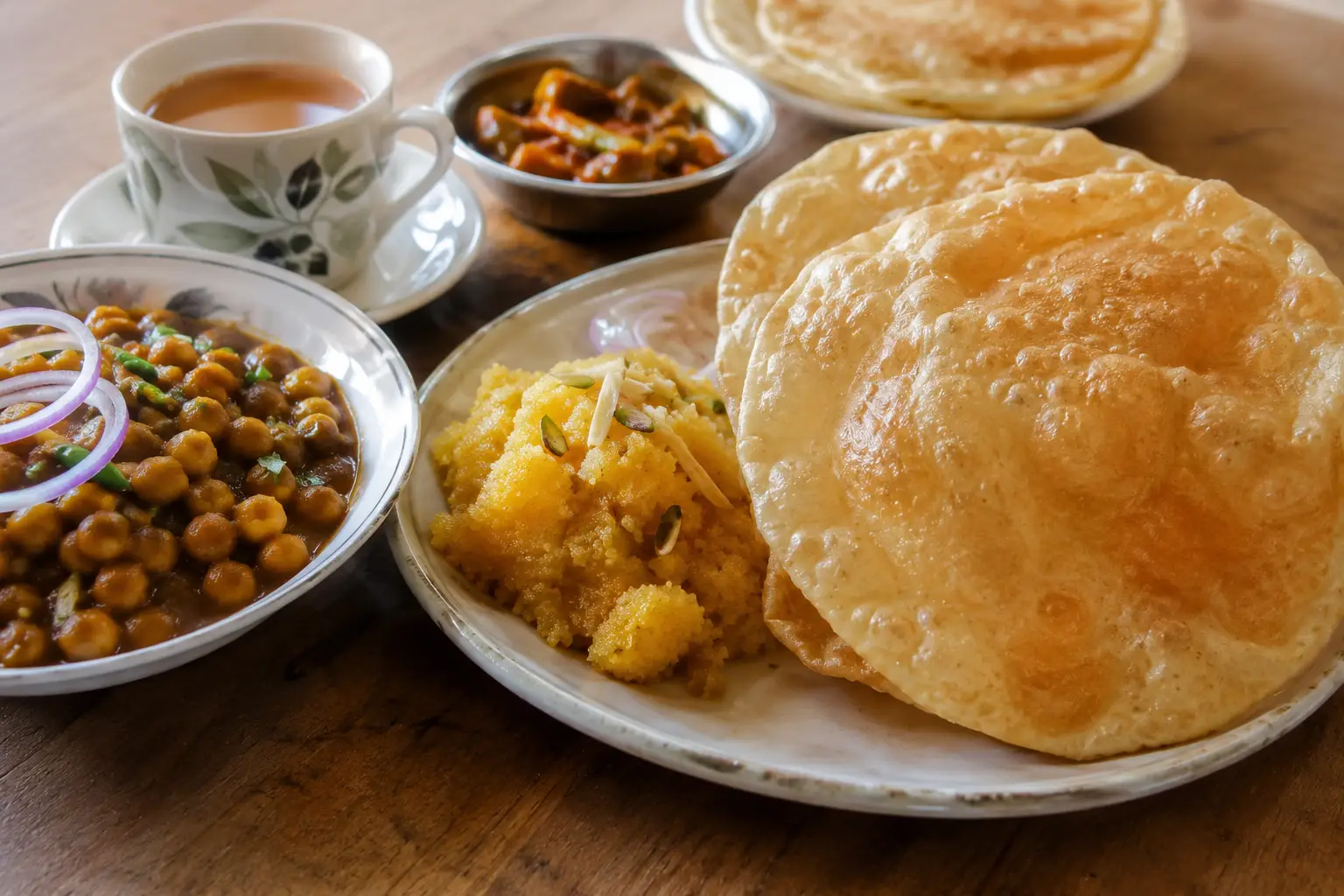
- Paratha with Omelette and Achar: The everyday weekday breakfast across the country. It is a ghee-fried paratha, a fried or spiced omelette, a spoonful of pickle, and a cup of Doodh Patti Chai (tea brewed directly with milk). It can be made in under fifteen minutes.
- Halwa Puri (حلوہ پوری): The traditional weekend breakfast. It includes semolina halwa cooked in ghee with sugar and cardamom, puffed and deep-fried puri bread, and a side of spiced chickpeas or potato curry. Most neighborhoods have one halwa puri shop that opens for only a few hours on weekend mornings, and the line outside is part of the experience.
- Nihari for Breakfast: As noted above, Nihari was originally a breakfast dish, served after the Fajr prayer to workers who needed a filling, high-protein meal. Some old parts of Lahore and Karachi still serve it only in the morning for this reason.
- Sindhi Breakfast, Koki and Dal Pakwan: In Sindh, breakfast often includes Koki, a thick, spiced flatbread made with wheat flour, onion, and cumin, cooked slowly on a griddle until firm, often paired with yogurt or tea. Dal Pakwan, crisp fried bread with spiced lentils and tamarind chutney, is another common Sindhi breakfast.
- Paya (پائے): A slow-cooked trotter curry, especially common in Punjab. It often replaces the lighter weekday breakfast on weekends or during colder months.
Vegetarian Pakistani Foods
Pakistani food is often thought of as meat-heavy, but everyday home cooking is vegetarian much more often than restaurant menus would suggest.
- Daal (دال): Lentils cooked with onion, garlic, and whole spices. It is by far the most-eaten dish in Pakistan, even though biryani and karahi get more attention. The type of lentil used, masoor, moong, chana, or maash, changes by region and season.
- Sarson ka Saag with Makki di Roti (سرسوں کا ساگ، مکئی دی روٹی): Mustard greens, often mixed with spinach, cooked slowly and topped with white butter or ghee, served with a thick, handmade maize-flour flatbread. This pairing is naturally vegetarian and is one of the most typical dishes from Punjab, especially in winter. We look at it again in the Punjab section below.
- Sai Bhaji (سائی بھاجی): A one-pot dish of spinach, lentils, potato, and eggplant, mashed together and cooked with cumin and garlic. It is a Sindhi household staple, naturally vegetarian, and usually eaten with plain rice—more on this in the Sindh section below.
- Chana Masala (چنے): Chickpeas cooked slowly in a tomato and onion gravy. It is a common lunch curry and one of the vegetarian options with the most protein.
- Bhindi Masala (بھنڈی مصالحہ): Okra, sliced and fried until slightly crisp, then finished in a light tomato and onion masala. It is a household staple because okra is affordable and available for most of the year.
- Aloo Gobi (آلو گوبھی): A dry potato and cauliflower curry, simply spiced and eaten with roti.
- Aloo Palak: Potatoes and spinach cooked down into a soft, mild curry. It is often one of the first curries given to children, since it is gentle and low in chili.
- Achar (اچار): Mango, lime, carrot, or mixed vegetable pickle, preserved in oil, salt, and whole spices. It is traditionally made once a year in large batches, sun-dried on rooftops for days before the oil and spices are added. It sits on nearly every Pakistani table.
- Raita (رائتہ): Yogurt with cucumber, mint, or onion, served alongside spicier dishes to cool the palate.
- Jau Sattu: Beyond being a drink, roasted barley sattu is a traditional, plant-based source of protein and fiber. It is especially useful for anyone eating less meat.
Famous & Popular Pakistani Foods
These are the dishes most likely to be on a menu, at a wedding, or in conversation the second someone mentions Pakistani food.
Curries, Karahi & Meat Mains
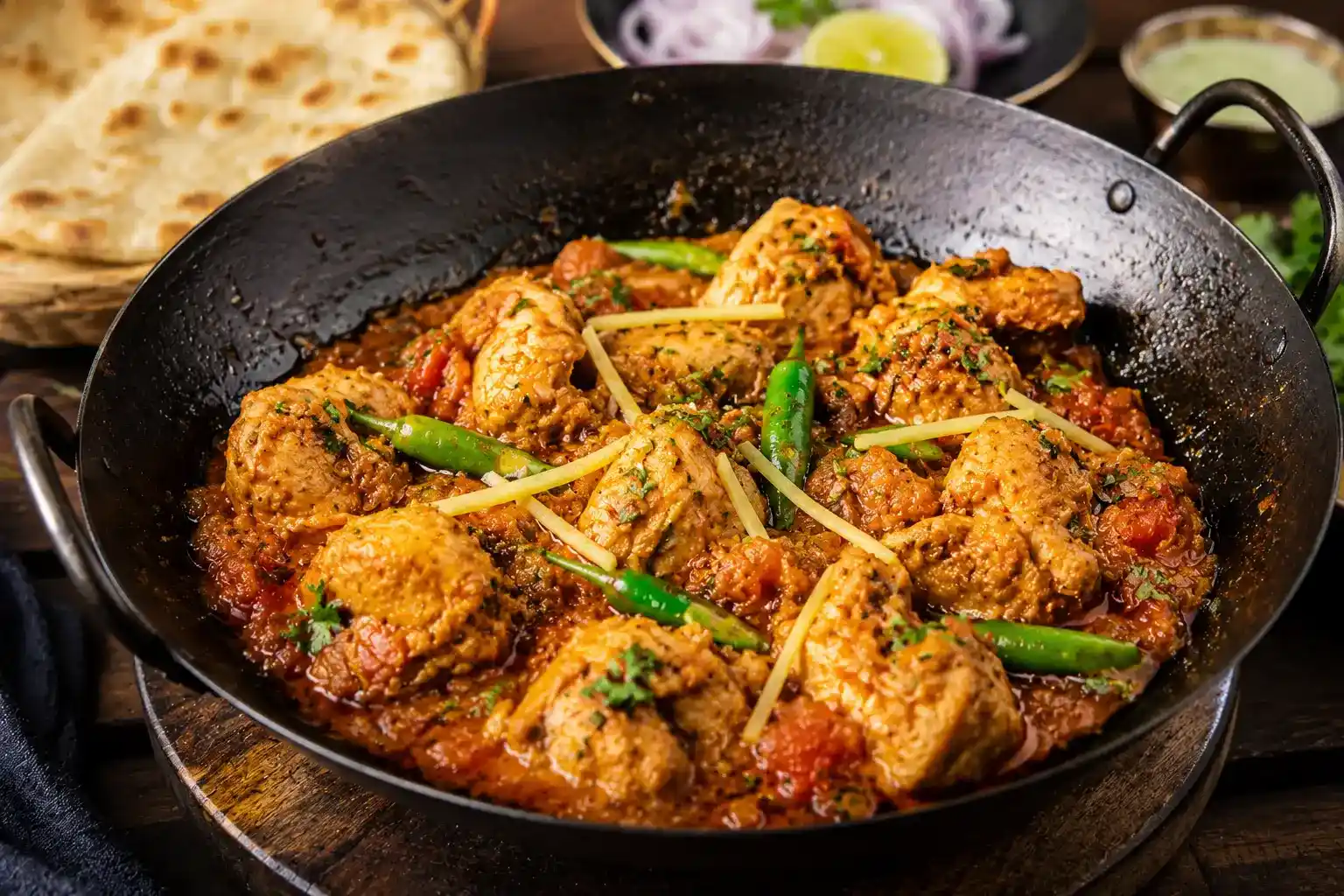
- Chicken Karahi (کڑاہی): A thick tomato and ginger-garlic curry, cooked fast and hot in a wok-shaped pan called a karahi. Bone-in chicken is traditional, and the gravy is cooked down until it sticks to the meat instead of forming a pool. It is eaten with naan or roti, not rice.
- Nihari (نہاری): Already covered above. It’s still finished with fresh lemon, ginger, and chili at the table.
- Haleem (حلیم): Wheat, barley, lentils, and shredded meat, cooked down for hours into one smooth, thick paste, then topped with fried onions and mint. It takes a lot of time and patience to make, so it is usually saved for Ramadan, Muharram, and special occasions.
- Korma (قورمہ): A rich, mild curry made with yogurt, browned onions, and whole spices, with no tomato in the base. It is seen as a step up from everyday home curries, and it is common at weddings.
- Aloo Gosht (آلو گوشت): Meat and potatoes cooked in a light, everyday gravy. It is one of the most-cooked dishes in Pakistani homes because it is easy to get right, cheap, and makes a small amount of meat go a long way for a full family meal.
- Chicken Handi: Chicken cooked in a clay or metal pot (handi) with cream, yogurt, and a milder mix of spices than karahi. It is a restaurant favorite, usually served in the same pot it was cooked in.
- Paya (پائے): Goat or cow trotters, cooked slowly until the broth becomes rich and thick. It is a winter breakfast or late-night dish, loved as much for comfort as for taste.
- Namak Gosht (نمک گوشت): A simple mutton curry from KPK, made with little more than salt, black pepper, and meat cooked in its own juices. There is no turmeric and no tomato in it.
- Shinwari Karahi: A dry karahi with very little spice, named after the Shinwari tribe of KPK. It lets the meat’s own flavor come through instead of using a heavy mix of spices.
Rice Dishes
- Biryani (بریانی): Layers of basmati rice, marinated meat, and fried onions, cooked together on low heat (“dum” style) until the rice takes on the color and smell of the spices underneath it. Pakistani biryani is usually spicier than other regional versions, and it often includes potatoes.
- Pulao / Yakhni Pulao (یخنی پلاؤ): Rice cooked in a clear, spiced meat stock (yakhni) instead of a thick curry base. It is lighter and less spicy than biryani, and it is the rice dish most households make for everyday meals or for people who prefer milder food.
- Kabuli Pulao (کابلی پلاؤ): A fragrant rice dish with meat, raisins, carrots, and nuts. It shows KPK’s close links to Afghan cooking, and it is served at festivals and family gatherings.
- Tehari: A simpler turmeric rice dish, often made without meat or with beef, cooked in one pot. It is a quick, everyday alternative to full biryani in many households.
Kababs & Street Food
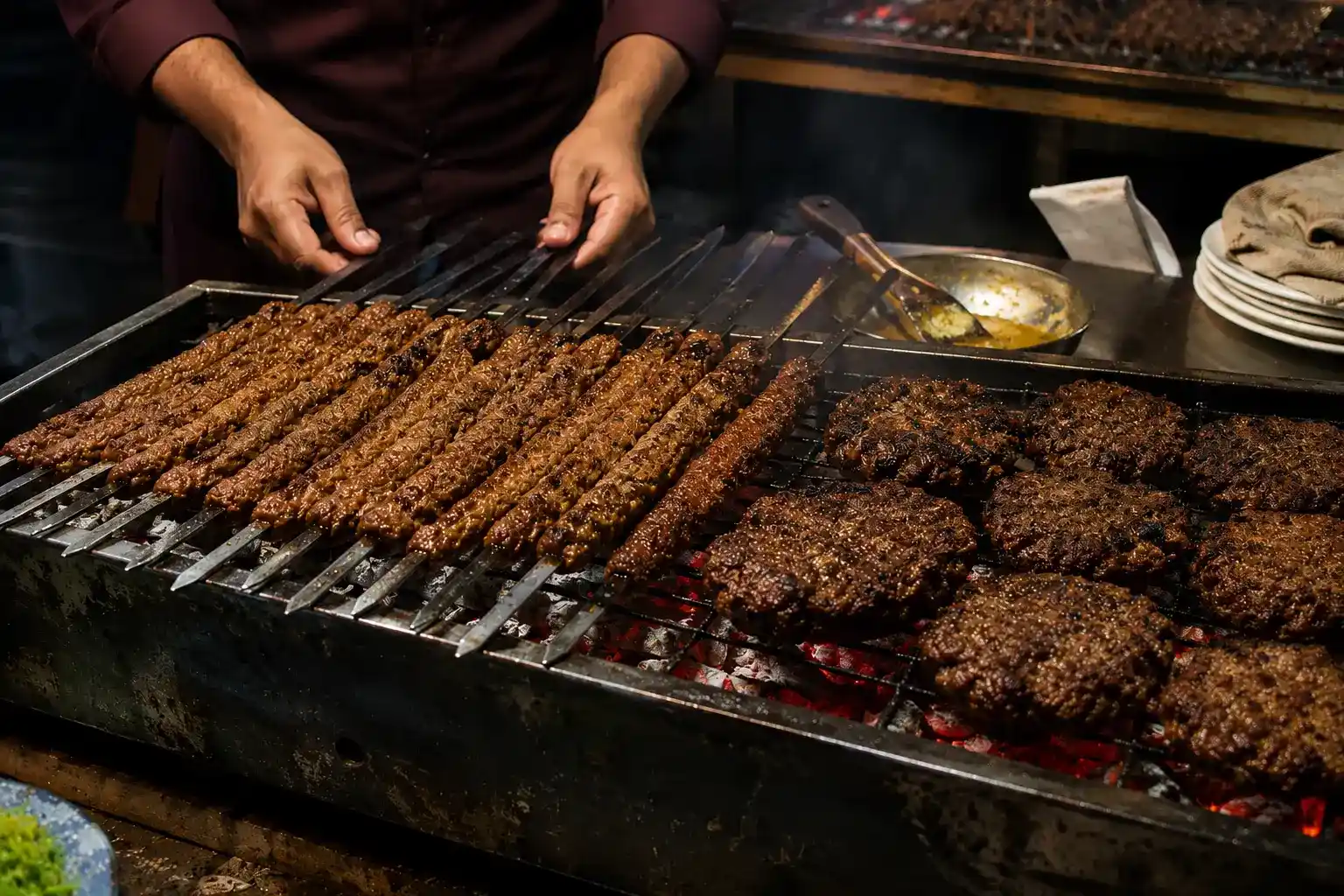
- Seekh Kabab (سیخ کباب): Minced meat, usually beef, shaped by hand onto skewers with ginger, garlic, and roasted spices, then grilled over charcoal. It is a regular part of barbecue nights and street stalls.
- Chapli Kabab (چپلی کباب): A flat minced-meat patty from Peshawar, made with dried coriander seeds and pomegranate seeds, then fried in its own fat for a crisp edge. It is one of the most well-known foods from KPK.
- Samosa (سموسہ): A triangle-shaped pastry filled with spiced minced meat or potato, deep-fried until the shell turns crisp and flaky. It shows up everywhere, from wedding trays to roadside carts, and it is a common Iftar food during Ramadan.
- Pakora (پکوڑا): Onion, potato, or spinach dipped in seasoned gram flour batter and fried until crisp. It is the classic rainy-day snack with a cup of chai, and it is also common on the Iftar table.
- Gol Gappay / Chaat: Gol Gappay (گول گپے) are crisp, hollow shells filled with spiced water and chickpeas. Dahi Bhalla, lentil dumplings soaked in yogurt and tamarind chutney, is another popular chaat item. Both are usually sold from street carts and eaten standing up.
- Karachi Seafood: Karachi’s location on the coast makes it different from the rest of Pakistan’s meat-and-wheat diet. Fried fish (usually sole or pomfret), butter garlic crab, and prawn karahi are sold at beachside stalls just as often as in restaurants.
Pakistani Breads
- Roti / Chapati (روٹی): A plain whole wheat flatbread cooked on a tawa (flat griddle). It is the everyday bread, made fresh at almost every meal.
- Naan (نان): A flatbread baked against the wall of a tandoor (clay oven) until it puffs up with light brown spots. It is mostly saved for guests and restaurants, since most home kitchens don’t have a tandoor.
- Paratha (پراٹھا): A layered flatbread, pan-fried in ghee until it turns flaky. It is the traditional weekend breakfast bread, often stuffed with potato, mince, or egg.
- Sheermal (شیرمال): A slightly sweet flatbread with a light saffron color. It is richer than naan, and it is often served alongside korma or kabab.
- Peshawari Naan: A sweet, stuffed naan filled with almonds, coconut, and raisins. Even though it carries the name of a Pakistani city, it is actually more common outside Pakistan than inside it.
Drinks
- Chai (چائے): Black tea boiled together with milk and sugar, instead of being brewed separately. It is the drink that marks different parts of the day, from morning to evening. Pakistan is one of the largest tea importers in the world, and it spends well over $600 million a year to meet the demand for tea.
- Lassi (لسی): A thick, chilled yogurt drink, made either sweet or salted. It started as a Punjabi tradition to help farm workers cool down and get their energy back. Sweet lassi topped with cream is the more common version served in restaurants today.
- Kahwa / Qehwa (قہوہ): Spiced green tea, brewed with cardamom and cinnamon, served without milk. It is the everyday drink at Peshawar’s tea houses, and a regular part of Pashtun hospitality.
Traditional Pakistani Food by Region
Traditional Pakistani food is not the same everywhere. A daily staple in one province can be something people in another province have never tried. Here is what each region is known for, and why.
Traditional Food of Punjab
Punjab’s traditional food is built around rich, buttery, wheat-based cooking that suits its very hot summers and cold winters.
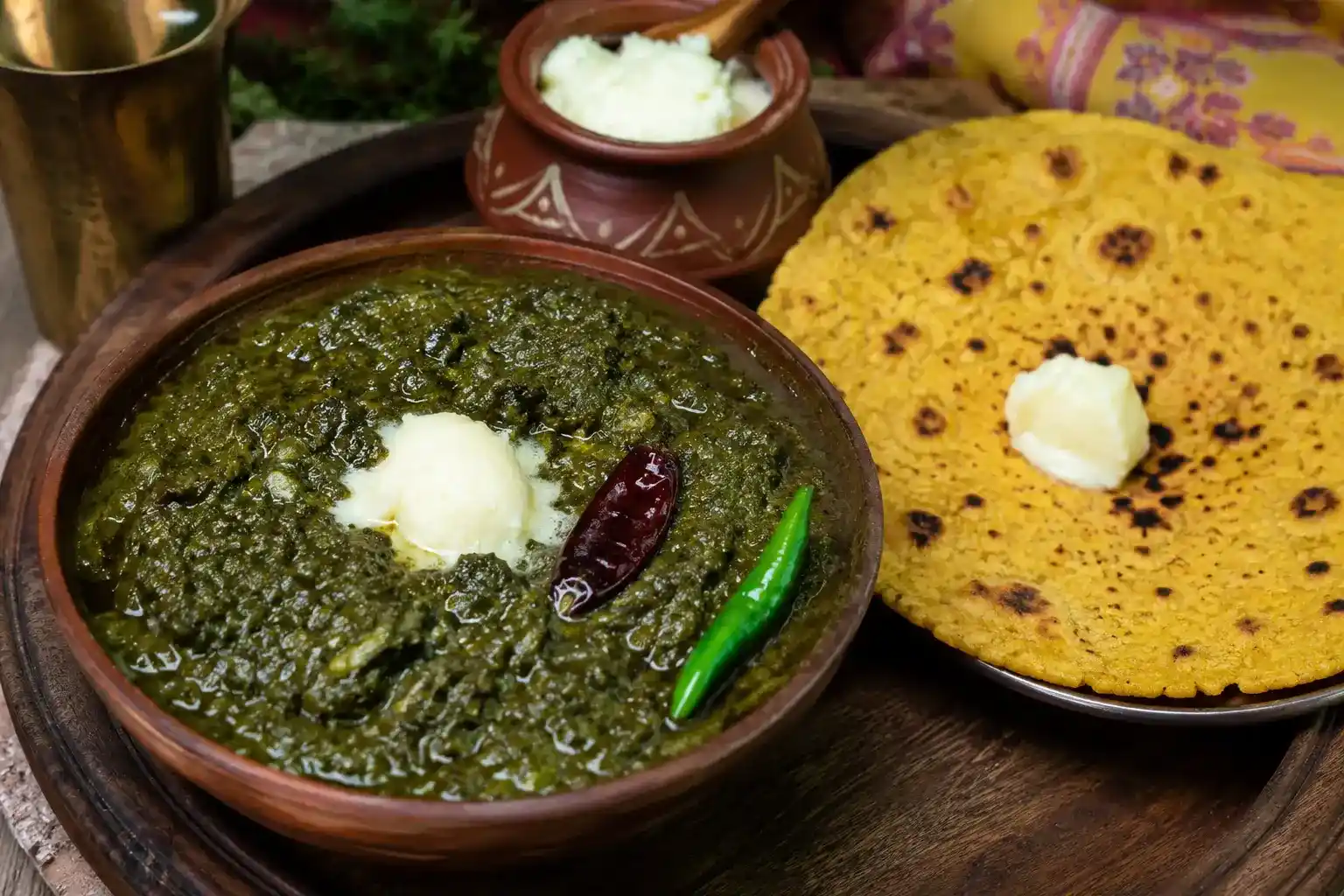
- Sarson ka Saag with Makki di Roti: Already covered in the vegetarian section above. It remains Punjab’s single most typical dish, especially in winter, and it is truly a winter dish, since the greens taste best in the cold season.
- Lassi: Lassi was first made to cool down and give energy back to farm workers, long before it became a restaurant drink all over the country.
- Tandoori Classics: Tandoori roti and tandoori chicken are cooked at high heat in a clay tandoor. This cooking method is also shared with Afghan and North Indian cooking, since they all came from the same old trade routes.
- Lahori Chargha: A whole chicken that is marinated, steamed until soft, then fried quickly for a crisp finish. It is a Lahore specialty for celebrations, not for everyday meals.
- Kadhi Pakora: A tangy yogurt and gram flour curry, filled with small fried gram flour fritters. It is a traditional Punjabi comfort food, usually served with plain rice.
Punjab’s own biryani and karahi also tend to be spicier and use more tomato than the versions found further south.
Sindhi Traditional Food
Sindh’s traditional food relies on rice, tamarind, and river fish. This comes directly from its location along the Indus River and its hot, dry weather. (Sindh’s breakfast dishes, Koki and Dal Pakwan, are covered in the breakfast section above.)
- Sindhi Biryani (سندھی بریانی): Made “pakki” style, where the meat is cooked separately before being layered with the rice. It is clearly spicier and tangier than Punjabi biryani, because it uses more tomatoes, chilies, and dried plums. Many people see it as the most popular biryani style in the country.
- Sai Bhaji: Already covered in the vegetarian section above. It remains one of Sindh’s defining traditional dishes.
- Sindhi Kadhi: Sindh’s version of kadhi. It adds tamarind and tomato to a gram flour and vegetable base, which gives it a stronger flavor than Punjab’s version. It is traditionally eaten with rice, not roti.
- Machi (مچھلی) / Pallo Fish: A regular part of meals along the coast, especially Pallo (Hilsa) fish, eaten alongside the everyday Sindhi meal of phulka (soft roti), rice, and whatever curry is available.
KPK (Khyber Pakhtunkhwa) Traditional Food
KPK’s traditional food reflects Pashtun heritage and old trade routes with Afghanistan. It favors simple seasoning that lets good meat carry the flavor on its own.
- Chapli Kabab: Covered above. It is the region’s best-known dish across the whole country.
- Kabuli Pulao: Covered above, served at festivals and family occasions.
- Namak Gosht and Shinwari Karahi: Both covered above, and both are built around very simple spicing.
- Mantu (منٹو): Steamed dumplings filled with spiced minced meat, topped with a yogurt and lentil sauce. It shows the region’s ties to Central Asia.
- Peshawari Naan and Kahwa: Covered above.
Traditional Food of Balochistan
Balochistan’s traditional food reflects a harsh, dry climate and a way of life where people used to move from place to place. It relies on slow cooking over an open fire, very little spice, and methods built to preserve meat without a fridge.
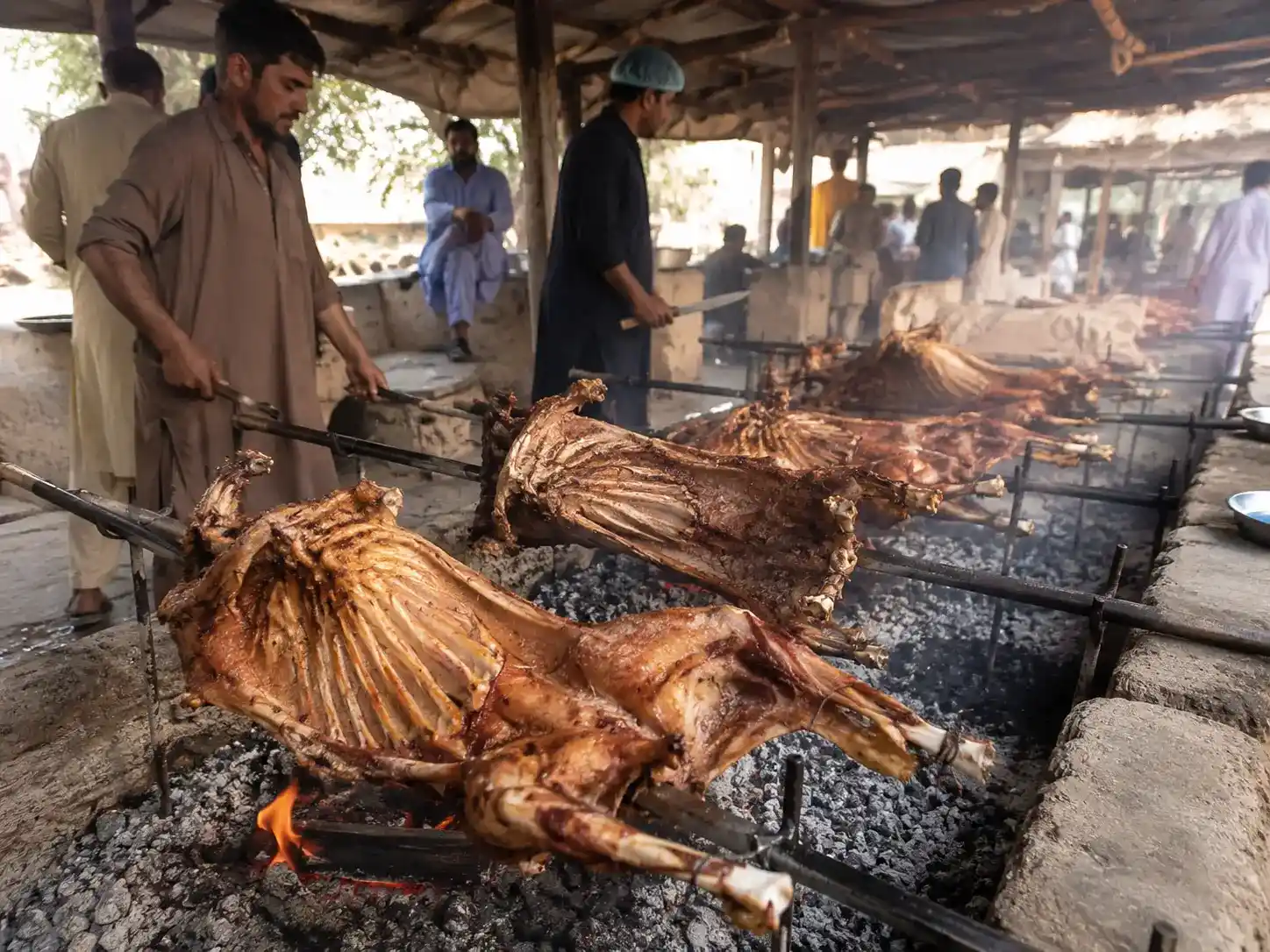
- Sajji (ساجی): A whole lamb or chicken, rubbed simply with salt, put on a skewer, and roasted slowly over open coals for hours. It is Balochistan’s best-known dish and a centerpiece at weddings. People love it because the very simple seasoning lets the meat’s own flavor lead.
- Landhi / Landi (لانڈھی): Meat, usually lamb or goat, salted and air-dried for weeks to keep it fresh through winter. It is still made today, often as a yearly tradition.
- Dampukht (دم پخت): Meat, slow-cooked in a sealed pot over very low heat. The pot is traditionally sealed with dough to trap the steam inside. Very little spice is used, so the meat’s own juices form the sauce.
- Kaak (کاک): A hard bread baked on stone. Dough is wrapped around a heated rock and baked beside an open fire. It is traditionally served with Dampukht, and it is made to stay fresh for days without spoiling.
Popular Pakistani Desserts & Sweets (Mithai)
Pakistani desserts, known together as mithai, are made mostly with milk, ghee, and dried fruit, rather than chocolate or refined flour. Most of them are saved for Eid, weddings, and Ramadan, instead of being eaten as a casual, everyday treat. Nine sweets in particular show up on almost every Pakistani dessert list:
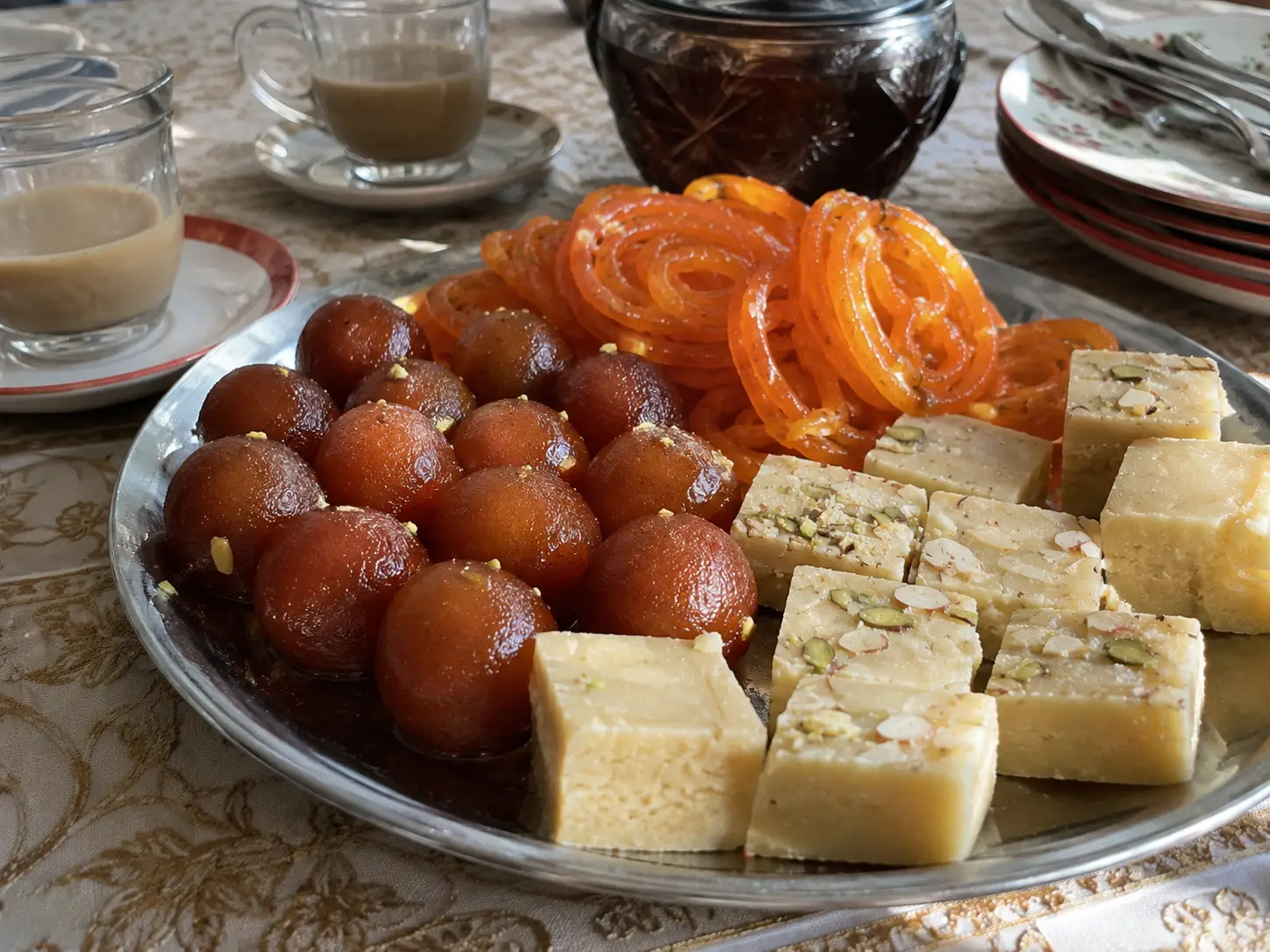
- Gulab Jamun (گلاب جامن): Deep-fried milk dumplings soaked in rose and cardamom-flavored sugar syrup. It is one of the most requested desserts at weddings and Eid.
- Jalebi (جلیبی): Fermented batter, piped into spirals and deep-fried until crisp, then soaked in saffron syrup. It is a traditional breakfast sweet, often eaten alongside halwa puri.
- Kheer (کھیر): Rice pudding, slow-cooked in milk with cardamom and topped with almonds and pistachios, the most common homemade Pakistani dessert.
- Gajar ka Halwa (گاجر کا حلوہ): Grated carrots, slow-cooked in milk and ghee until dense and sweet, finished with nuts. A winter dessert made when fresh carrots are in season.
- Ras Malai (رس ملائی): Soft, flat milk dumplings, soaked in sweetened, saffron-flavored thickened milk. It is usually served chilled for special occasions.
- Sheer Khurma (شیر خرما): Vermicelli cooked in milk with dates, nuts, and sugar, made specifically on the morning of Eid ul-Fitr. The name is Persian: sheer means milk, khurma means dates.
- Zarda (زردہ): Saffron-colored sweet rice cooked with sugar, ghee, and dried fruit, a traditional wedding and festival dish, often served alongside savory biryani on the same table.
- Kulfi (کلفی): A dense, slow-frozen milk dessert. It is richer than regular ice cream because it is made by cooking milk down instead of churning air into it. It is often served as part of Falooda, a layered drink of rose syrup, vermicelli, and basil seeds.
- Barfi (برفی): A dense, fudge-like milk sweet, cut into squares or diamonds, often topped with edible silver leaf.
Beyond these nine, a few more are worth knowing. Firni is a smoother version of kheer, made with ground rice and set in small clay bowls. Sohan Halwa is a chewy cornstarch and nut sweet that is stirred for hours, and it comes from Multan. Naan Khatai is a cardamom shortbread cookie linked to Lahore’s older bakeries. It is a real household staple, even though shorter lists often leave it out.
Which dessert is linked to Sindh? Actually, there are two, and both are correct. Tayri is a sweet version of Sindhi rice, cooked with desi ghee, gur, and dried coconut. It is similar to kheer, but has a deeper, caramel-like sweetness from the jaggery, and it is traditionally made for festivals like Cheti Chand. Mitho Lolo is a sweet, griddle-cooked flatbread made with wheat flour, ghee, and sugar syrup. It is less known outside Sindh and is usually made for special family occasions rather than sold in shops.
Easy Pakistani Foods for Beginners & Students
If Pakistani food is new to you, or you are a student cooking for yourself with limited time and a small kitchen, a few dishes are much easier to get right than the rest.
- Chicken Karahi: Full of flavor without being too spicy, and hard to get wrong.
- Chicken Korma or Chicken Handi: Both are creamy rather than fiery hot.
- Daal Chawal (lentils and rice): The easiest, cheapest, and most filling combination in all of Pakistani cooking.
- Aloo Gosht: Needs only a handful of ingredients and one pot.
- Jau Sattu mixed with cold milk or water: A fast, filling snack or light meal that needs almost no cooking, which is why it has stayed a go-to choice for students for generations.
If you are not sure how much spice you can handle, ask for anything “mild,” and eat spicier dishes with plain naan and raita to help cool things down.
A Week of Pakistani Food: Sample Menu
A realistic week repeats a few dishes rather than trying something completely new every day. Here is a simple Pakistani food menu for a week, useful whether you are planning dinner tonight or the next seven days:
| Day | Dish |
|---|---|
| Monday | Daal Chawal (lentils and rice) |
| Tuesday | Aloo Gosht (meat and potato curry) |
| Wednesday | Chicken Karahi |
| Thursday | Bhindi Masala with roti |
| Friday | Chicken Biryani or Yakhni Pulao |
| Saturday | Chana Masala with puri |
| Sunday | Halwa Puri (breakfast); Sarson ka Saag with Makki ki Roti (dinner) |
Breakfast repeats daily in most homes: paratha, egg, and chai on weekdays, with halwa puri saved for one weekend morning.
Pakistani Food Names List: A to Z, with Urdu
A quick reference for every dish, bread, and staple covered in this guide.
| English Name | Urdu | Category |
|---|---|---|
| Achar | اچار | Condiment |
| Aloo Gobi | آلو گوبھی | Vegetarian |
| Aloo Gosht | آلو گوشت | Curry |
| Barfi | برفی | Dessert |
| Biryani | بریانی | Rice dish |
| Chai | چائے | Drink |
| Chana Masala | چنے | Vegetarian |
| Chapli Kabab | چپلی کباب | Kabab |
| Daal | دال | Vegetarian |
| Dampukht | دم پخت | Curry |
| Desi Ghee | دیسی گھی | Pantry staple |
| Desi Gur | دیسی گڑ | Pantry staple |
| Gajar ka Halwa | گاجر کا حلوہ | Dessert |
| Gulab Jamun | گلاب جامن | Dessert |
| Haleem | حلیم | Stew |
| Jalebi | جلیبی | Dessert |
| Jau Sattu | جو کا ستو | Pantry staple |
| Kaak | کاک | Bread |
| Kahwa | قہوہ | Drink |
| Karahi | کڑاہی | Curry |
| Kheer | کھیر | Dessert |
| Korma | قورمہ | Curry |
| Kulfi | کلفی | Dessert |
| Lassi | لسی | Drink |
| Makki ka Atta | مکئی کا آٹا | Pantry staple |
| Mantu | منٹو | Dumpling |
| Naan | نان | Bread |
| Naan Khatai | نان خطائی | Dessert |
| Nihari | نہاری | Stew |
| Panjeeri | پنجیری | Pantry staple |
| Paratha | پراٹھا | Bread |
| Paya | پائے | Curry |
| Pulao (Yakhni) | یخنی پلاؤ | Rice dish |
| Raita | رائتہ | Condiment |
| Roti | روٹی | Bread |
| Sai Bhaji | سائی بھاجی | Vegetarian |
| Sajji | ساجی | Roast |
| Samosa | سموسہ | Street food |
| Sarson ka Saag | سرسوں کا ساگ | Vegetarian |
| Seekh Kabab | سیخ کباب | Kabab |
| Sheer Khurma | شیر خرما | Dessert |
| Sheermal | شیرمال | Bread |
| Zarda | زردہ | Dessert |
FAQs
What are famous Pakistani foods? Biryani, Nihari, Chicken Karahi, Chapli Kabab, and Haleem are the dishes most people mean when they say “famous Pakistani food.” Some version of each shows up on almost any menu in the country, from roadside dhabas to wedding halls.
What are the top 10 Pakistani dishes? Biryani, Nihari, Chicken Karahi, Haleem, Chapli Kabab, Seekh Kabab, Korma, Sajji, Sarson ka Saag with Makki ki Roti, and Gulab Jamun make up most people’s top 10, spanning mains, regional specialties, and dessert.
What are the top 5 most popular foods? Narrowed to five: Biryani, Nihari, Chicken Karahi, Chapli Kabab, and Haleem. These show up most often at weddings, Eid gatherings, and ordinary family meals alike.
What is a good Pakistani food for beginners, or for students? Chicken Karahi and Chicken Korma are the easiest starting points, flavorful without extreme heat. For students cooking at home, Daal and Aloo Gosht are the most forgiving, needing only a handful of ingredients and one pot.
What’s the best Pakistani food for beginners? Chicken Korma, Chicken Handi, and mild Chicken Biryani are the most forgiving, since all three lean creamy rather than fiery. Pair any of them with plain naan and raita.
What do Pakistanis eat daily? Most days center on one curry, daal, or vegetable sabzi, eaten with roti and a side of raita or achar. Rice dishes like biryani are usually saved for guests or special occasions rather than eaten daily.
What is Pakistan’s national dish? Nihari is the dish most widely called Pakistan’s national dish, though it’s never been made official by government decree. Biryani is the strongest rival claim, and some argue daal deserves the title instead, since it’s what most Pakistanis actually eat most often.
What is Desi food in Pakistan? “Desi food” means local, home-style South Asian cooking, as opposed to fast food or Western dishes. In Pakistan, that covers everything from daily daal chawal and roti-sabzi to festive biryani, plus pantry staples like desi ghee and panjeeri that desi kitchens have relied on for generations.
Which is the popular dish of Pakistan? There’s no single dish every Pakistani agrees on; popularity shifts by province. Punjab leans toward Chicken Karahi and Biryani, Sindh toward Sindhi Biryani, Balochistan toward Sajji, and KPK toward Chapli Kabab.
What is Pakistan’s most popular dish? By sheer frequency, Biryani is usually named the most popular. It appears at weddings, Eid celebrations, and ordinary Sunday lunches in a way few other dishes manage.
What is Pakistan’s most famous food? Outside the country, Biryani and Chicken Karahi are what most people recognize as Pakistani food, largely through desi restaurants abroad. Within Pakistan, Nihari carries similar weight as the dish most tied to national identity.
What Pakistani food is healthy? Daal, sabzi (vegetable curries), and grilled dishes like chicken tikka are among the lighter, more nutrient-dense traditional options, especially next to deep-fried snacks or ghee-heavy sweets. Traditional staples like jau sattu and moringa powder are also long-standing choices for natural energy without refined sugar.
What is a common Pakistani dessert? Kheer, a slow-cooked rice pudding made with milk, sugar, and cardamom, is one of the most common Pakistani desserts, served at everything from family dinners to Eid.
What are the 9 common desserts in Pakistan? Gulab Jamun, Jalebi, Kheer, Gajar ka Halwa, Ras Malai, Sheer Khurma, Zarda, Kulfi, and Barfi make up the nine desserts most Pakistanis grow up eating.
Which dessert is associated with Sindh? Two: Tayri, a sweet rice dish made with desi ghee, gur, and dried coconut, traditionally made for festivals like Cheti Chand; and Mitho Lolo, a sweet, griddle-roasted flatbread, usually made for special family occasions.
What are traditional Pakistani dishes? Traditional Pakistani dishes are the ones passed down through generations rather than invented for a modern menu: Nihari, Biryani, Haleem, Sarson ka Saag, and Sajji, alongside pantry staples like desi ghee, panjeeri, and desi gur.
What is commonly eaten with Pakistani food? Raita, kachumber salad, and achar are the standard sides, alongside naan or roti for scooping up curry. A glass of lassi or a cup of chai typically finishes the meal.
What is a traditional Pakistani breakfast? On weekdays, it’s usually paratha with omelette and achar. On weekends, Halwa Puri is the traditional choice across most of Pakistan, with Koki and Dal Pakwan as Sindh’s regional alternative.
What sweets are popular in Pakistan? Gulab Jamun, Ras Malai, Barfi, and Jalebi are the sweets you’ll see most at weddings and Eid, usually made with khoya, ghee, and sugar syrup. Homemade versions lean heavily on desi ghee and desi gur for their richness.
What are some well-known Pakistani food brands? Well-known brands split into two groups: large packaged staples (tea, spice, and ghee makers sold nationwide) and smaller heritage brands focused on traditional, home-style products. Khaalis Zaike, for instance, focuses specifically on staples like desi ghee, panjeeri, sattu, and gur, made in small batches rather than mass-produced.
Final Thoughts
Pakistani food covers far more ground than any single restaurant menu can show. It is the Nihari simmering overnight in a Karachi nihari-khana, the Sajji roasting over an open flame in Balochistan, and the simple daal chawal that families in every province actually eat most nights. Traditional Pakistani foods are not only the dishes on this list, either. They also include the desi ghee, panjeeri, gur, and makki ka atta that made most of these dishes possible in the first place, often for generations before any of them needed a restaurant to become famous.
If you would like to bring some of these traditional staples into your own kitchen, Khaalis Zaike’s desi food collection is a good place to start. Everything is made the traditional way, without shortcuts.